What makes a custom streetwear manufacturer ideal for limited edition drops and capsules?
What Makes a Sweatpants Manufacturer More Useful to Brands Moving Into Larger Volumes
Sweatpants used to sit in the “easy” part of the line. Not the hero jacket. Not the washed graphic hoodie that eats half the sample budget. Not the denim program that turns one fit mistake into months of back-and-forth. Just pants. Soft, familiar, commercially safe.
That view breaks fast once the numbers get bigger.
A lot of established streetwear brands and independent brands with real traction find this out the hard way. The first run looks good. The early photos land. The set sells. Then reorders hit, colors expand, sizes spread out, and the category starts showing its real weight. Suddenly the questions are not about whether a factory can make sweatpants. They are about whether the leg still falls the right way, whether the cuff starts biting too hard, whether the waistband still recovers after wear, and whether the second run still feels like the product people bought the first time.
What sounds like a simple sourcing question usually turns into a product-system question. A useful sweatpants manufacturer is not just one that can sew fleece. It is one that can protect shape, fabric behavior, visual balance, and production rhythm after the category stops being a side item and starts becoming a real volume driver.
Why do sweatpants become a more serious manufacturing category once volume goes up?
A sweatpants program gets harder when it moves from “one good drop” to repeat-volume business. At that point, comfort, silhouette, fabric weight, waistband recovery, cuff pressure, grading, and post-finish behavior all start affecting sell-through, reorders, and customer trust at the same time.
At low volume, a lot can be hidden by novelty. A set looks good in the campaign. A fleece pant feels solid in hand. The overall mood is right. But once the category starts moving in bigger numbers, the garment stops being judged like a styling prop and starts being judged like a repeat purchase.
That changes everything.
Sweatpants are worn hard. They get washed often. They get compared directly against earlier drops. They are also one of the easiest products for customers to read instantly. People may not know how to explain it in technical terms, but they can feel when the leg looks flatter, when the rib looks cheaper, when the rise feels off, or when the fabric loses body faster than it should.
This is why a real streetwear bottoms program cannot be treated like a simple extension of hoodie production. Bottoms carry their own pressure. The silhouette has to feel intentional from the waist down. The fabric cannot just feel soft; it has to support how the shape sits on body. And once the style becomes part of a core set or repeat seasonal program, minor drift stops being minor.
Which product details separate a bulk-ready sweatpants manufacturer from a factory that only handles samples well?
The difference usually shows up in the parts that get overlooked in early sourcing conversations: waistband construction, elastic behavior, cuff tension, pocket entry reinforcement, crotch balance, side seam stability, and how the fleece hangs after finishing. A clean sample is not proof of bulk readiness.
A sample-friendly factory can often make one nice-looking piece. That is not the same as building a repeatable bottoms category.
The real separation starts in places that do not photograph well but absolutely shape the product:
Waistbands are a big one. If the tunnel construction is uneven, if the elastic spec drifts, or if the drawcord channel starts twisting under pressure, the garment loses its polish fast. Cuffs matter just as much. Too weak, and the hem looks dead. Too tight, and the whole leg closes down in the wrong place. That does not just change comfort. It changes the line of the product.
Then there is pocket behavior. Weak pocket openings collapse. Bad reinforcement shows up after wear. A pocket bag that pulls the front panel the wrong way can distort the whole stance of the pant. Add washed fleece or garment dye, and all of that becomes more sensitive.
The most useful streetwear clothing manufacturers know that sweatpants are not just “hoodie fabric with legs.” They treat rise, thigh ease, knee break, hem behavior, and pocket placement as part of one product system. That is usually where general apparel factories start to get exposed. They can sew the garment, but they cannot always protect what the garment is supposed to feel like once it is worn, washed, packed, and repeated in volume.
How much of sweatpants performance is really about fabric behavior rather than sewing?
A lot more than many teams expect. Sewing matters, but fabric behavior sets the ceiling. If fleece weight, yarn quality, brushing response, shrink allowance, dye stability, and post-wash recovery are not understood early, the garment can lose shape and mood even when the sewing line is clean.
This is one of the biggest blind spots in sweatpants development.
Teams will sometimes approve a sample because the construction looks solid, but the bigger question should be: what happens after finishing, pressing, packing, shipping, and real wear? That answer lives in the fabric.
A strong sweatpants factory has to understand the difference between fabric that feels heavy in hand and fabric that actually supports a streetwear silhouette. Those are not always the same thing. A fleece can hit the right gsm and still fall flat. It can feel plush and still lose rebound. It can brush beautifully and still shrink in a way that changes inseam behavior, cuff pressure, or waistband comfort.
That is why washed sweatpants deserve more front-end attention than many teams give them. Garment dye, vintage fading, surface abrasion, and softening processes can all improve the visual language of the piece, but they also change how the fabric reads after the garment leaves the sample room. Teams that want a deeper take on fabric mood, finish risk, and how surface treatment changes a garment over time can go further through these advanced streetwear washing workflows, especially when the goal is to keep washed pieces from feeling flat, overprocessed, or disconnected from the brand’s visual direction.
The same logic applies to decoration. If the product includes embroidery, prints, appliqué, or layered branding, fabric behavior becomes even more important. Print chemistry, surface texture, wash depth, and fleece density all affect how the artwork lands. Teams comparing decoration routes in a more technical way can use this screen-print and DTG decision path for streetwear products as deeper background reading, not because sweatpants are “just about printing,” but because graphics, fabric, and silhouette rarely behave as separate decisions in real streetwear development.
What should brand teams lock down in fit and block development before scale makes changes expensive?
A sweatpants style should be approved as a block, not just as a sample. That means the rise, seat, thigh volume, leg flow, cuff opening, waistband pressure, and grade behavior all need to be understood as one controlled structure before the style moves into larger commitments.
This is where a lot of brand teams lose time.
They approve what looks like the right silhouette on one sample size, then find out later that the shape does not hold once it moves across the size range. Or the sample looks right before wash, but not after. Or the waist feels good on fit model one, but the grade rule makes the larger sizes lose the intended line.
Streetwear sweatpants are especially sensitive here because proportion is the product.
A relaxed straight-leg style needs enough weight and width to look deliberate, not lazy. An oversized silhouette needs volume without turning into a tube. A stacked leg needs the right outseam flow and hem behavior or it starts looking accidental. Open hems, elastic hems, and adjustable hems all create different visual endings. None of that should be left to chance.
The best product development teams treat bottoms blocks like branded assets. They are not just approving measurement charts. They are approving a visual language: how the seat sits, how the leg opens, how the fabric breaks at the shoe, how much attitude lives in the shape before graphics even enter the conversation.
That is one reason sweatpants often become a serious indicator of whether a factory really understands streetwear or is still reading the category through ordinary menswear logic. General factories tend to normalize. They make the shape safer. They reduce drama. They clean up what was supposed to feel more charged. Streetwear brands with proven sales usually need the opposite: not chaos, but control without flattening identity.
Where do sweatpants programs usually break between sample approval and bulk production?
Most breakdowns do not begin in the idea. They begin in the handoff. The common failure points are fabric substitutions, elastic changes, wash variation, cutting drift, rushed finishing, and poor communication between the approved sample and the actual bulk execution path.
This is the part brand teams usually remember because it is where money starts burning.
The sample was signed off. The fit looked good. The fabric felt right. Then the bulk run arrives and the product is not fully wrong, but it is wrong enough. The leg does not hold the same way. The waistband feels different. The rib pressure is off. The wash looks cleaner, flatter, or just less alive. The graphic sits a little differently on body. Nothing looks catastrophic on paper. Everything feels smaller once it is in hand.
That is why front-end review matters so much. A factory that only “produces according to the tech pack” can miss the real risk. A more useful cut-and-sew streetwear factory reads ahead. It asks whether the wash will dull the graphic too much. Whether the embroidery will over-harden the panel. Whether the grade keeps the same visual proportion across sizes. Whether the chosen elastic will change the stance of the leg. Whether the chosen finish will add softness but kill structure.
The brands that scale this category well are usually the ones that stop treating pre-production as a paperwork stage and start treating it like risk control. That means fabric locking, trim locking, fit confirmation after finishing, and production checkpoints that match the actual sensitivity of the product. Sweatpants may look calm compared to a patch-heavy varsity jacket or a distress-heavy zip hoodie, but once they turn into repeat business, they punish loose handoffs just as hard.
How does a more useful sweatpants manufacturer help procurement teams and product developers reduce downstream risk?
The most useful manufacturer makes risk visible before it becomes expensive. It turns product intent into checkpoints: tech-pack review, fabric verification, fit confirmation after finish, trim locking, pre-production review, and category-specific inspection logic that reflects how sweatpants actually fail in bulk.
For procurement teams, this matters because bottoms errors do not stay in production. They travel downstream. They show up in late corrections, higher rework, slower replenishment, mismatched set programs, and customer complaints that sound subjective but usually trace back to a very physical issue.
A useful streetwear manufacturer helps reduce that by making the conversation more operational. Not just “we can do it,” but: here is what has to be locked before the order moves; here is what becomes non-negotiable at higher volume; here is where the product is structurally sensitive; here is what should be checked again after wash, not only before.
That is also why compliance and process discipline matter more than people sometimes admit in streetwear. When a category becomes important to repeat business, teams need more than aesthetic talent. They need traceability, audit readiness, and process maturity. For readers who want a deeper look at how brand-side risk control increasingly overlaps with audit and sourcing expectations, this breakdown of SMETA 4P social compliance frameworks and how they differ from BSCI is useful context, especially when the question is not just “can this factory make the garment?” but “can it support a long-term program without turning every reorder into a fresh gamble?”
In other words, usefulness is not a soft quality. It is a production behavior. It shows up in the manufacturer’s ability to translate style into checks, checks into execution, and execution into repeatable bulk outcomes that do not keep forcing the brand to relearn the same lessons.
Why does launch rhythm matter so much once sweatpants stop being a side item and become a program item?
When sweatpants become a repeat-volume category, timing becomes part of product quality. A useful manufacturer supports reorders, color extensions, matching-set planning, and seasonal refreshes without forcing the brand to rebuild the category every time demand moves.
This is where the conversation leaves the sample room and enters actual business.
A sweatpants style that sells once is one thing. A sweatpants line that has to keep working across core colors, new washes, matching hoodies, and shifting calendars is something else. Once brands with validated market demand start leaning on fleece bottoms as part of a real program, timing becomes inseparable from the product itself.
Late goods miss momentum. Slow reorders kill live demand. Bad set alignment weakens the top-and-bottom read that often drives the whole purchase. Even small timing slips can hurt because sweatpants are frequently tied to coordinated drops, content cadence, and replenishment logic.
That is why set-based production matters. A strong fleece program is not just about the pant. It is about how the pant and the hoodie speak the same language in weight, drape, wash, and color tone. For teams building that kind of coordinated product structure, it helps to study how streetwear tracksuit development is handled when the goal is not random matching pieces, but a unified set that holds its identity across sizes and larger production runs. The same applies at the category level for heavyweight streetwear sweatpants programs, where shape retention, waistband logic, and surface finish all need to stay aligned with the rest of the collection rather than behaving like an afterthought.
For brands with established sales channels, this is often the real turning point. Sweatpants stop being “merch-adjacent comfort wear” and start acting like dependable volume with brand meaning attached to it. Once that happens, a factory’s value is measured less by whether it can make one good pant and more by whether it can keep the category moving without draining time from design, merchandising, and sourcing teams every single season.
So what actually makes one sweatpants manufacturer more useful than another when the stakes get bigger?
The more useful manufacturer is usually the one built for streetwear-specific bulk control: strong block development, fabric judgment, pre-production risk recognition, coordinated finishing, set-based thinking, and enough operational depth to move from approved sample to stable volume without losing the product’s original point.
This is the moment where factory type matters.
Some factories are perfectly adequate when the ask is simple, the order is contained, and the brand can babysit every step. But at larger volume, that model starts to drag. It becomes too reactive. Too dependent on the client to catch issues first. Too easy to destabilize with fabric swaps, outside process changes, or rushed timelines.
A more useful streetwear manufacturer looks different. It reads the category through silhouette, wash mood, graphic scale, and commercial timing at the same time. It is not impressed by a clean sample if the bulk path is weak. It knows that fleece bottoms for established streetwear brands need more than sewing capacity. They need front-end judgment and back-end discipline.
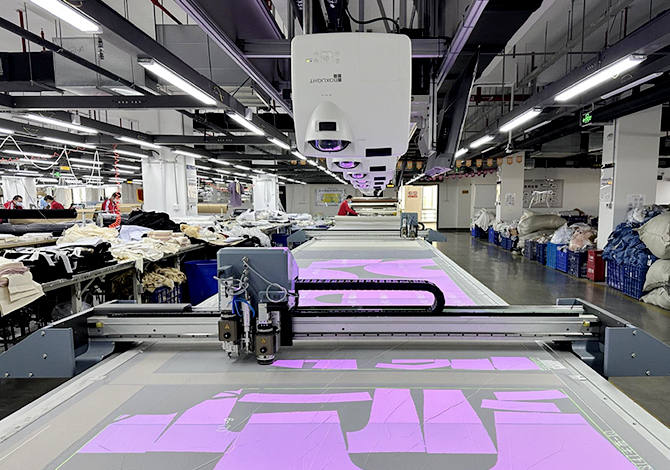
One reference point here is Groovecolor. In the materials reviewed for this article, the factory frames sweatpants as a heavyweight streetwear category tied closely to hoodie and tracksuit development, supports relaxed straight-leg through exaggerated oversized fits, works across embroidery, print, appliqué, and garment-wash routes, and builds around a broader system that includes tech-pack feasibility review, senior patternmaking, manual spreading plus automated laser cutting, AI fabric inspection, ERP traceability, and an eight-step quality-locking workflow. Its disclosed operating range also points to 300–600gsm hoodie and sweatpant programs, monthly capacity up to 300,000 pieces, and SMETA 4P-backed compliance for long-term brand evaluation.
That matters not because one factory should dominate the conversation, but because it shows what “useful” actually looks like in structural terms. The more helpful partner is usually not the one making the loudest promise. It is the one whose production model is already built around the exact pressures that show up when fleece bottoms stop being a side category and start becoming part of how the brand scales. Groovecolor’s own positioning materials also make clear that it is geared toward established streetwear brands, brands with validated market demand, and brand-side teams managing real production complexity, rather than beginner traffic, one-off customization, or stock-based business models.
Final thought
For established streetwear brands, the real decision is usually less about finding a factory that can make sweatpants and more about finding a manufacturing structure that can carry the category once it starts mattering.
That is a different question.
It is a question about fabric behavior, fit control, timing, handoff discipline, and how well a factory understands the difference between a fleece pant that merely exists and one that still lands with shape, presence, and commercial confidence after the volume gets serious.
That is what makes a sweatpants manufacturer more useful. Not the promise. The structure behind it.
The Manufacturing Value of High-Level Embroidery, Print, and Wash Techniques in Streetwear Hoodies
Streetwear does not get remembered because a hoodie has “more stuff” on it. It gets remembered when the hoodie feels finished before anyone reads the logo. The weight hangs right. The graphic has tension. The surface already carries age, attitude, and depth. It looks like a product that belongs to a real drop, not a blank body that got decorated late in the process.
That is exactly why advanced hoodie decoration has turned into a sourcing issue, not just a styling one. A lot of factories can technically offer embroidery, printing, and washing as separate services. Far fewer can make those processes behave like one product language. That gap matters more now because streetwear brands are asking hoodies to do more than keep a collection warm. They have to carry identity, justify price architecture, lead campaign imagery, and still hold up when the order moves beyond one carefully handled sample.
For creative teams, the temptation is obvious. A cracked print can make a new hoodie feel instantly lived-in. Dense embroidery can turn a flat chest graphic into something with real shadow and lift. A good wash can knock the surface out of that too-clean, too-new zone and make the whole piece feel culturally closer to how people actually want to wear it. But the closer a hoodie gets to that layered, high-impact look, the less room there is for casual execution.
That is where the manufacturing value of high-level embroidery, print, and wash techniques really starts. Not in the service list. In the product outcome.
Why do advanced embroidery, print, and wash techniques change the value of a streetwear hoodie so much?
Advanced decoration changes hoodie value because it affects far more than appearance. It changes how the garment reads on body, how premium the surface feels up close, how much identity the product can carry without oversized branding, and how clearly one hoodie can function as a hero piece inside a larger collection.
In older product logic, a hoodie could still work as a “good basic” with clean fleece, a decent fit, and a straightforward print. That is still true for some programs. But in modern streetwear, the market has become much more sensitive to surface language. Buyers notice whether a graphic feels flat or dimensional. They notice whether a garment wash creates mood or just makes the body look muddy. They notice when embroidery gives presence to a design and when it just adds weight without adding meaning.
This matters because a hoodie is often doing three jobs at once now. First, it has to make sense in the collection. Second, it has to stand up in close-up content, whether that is an online product page, a campaign still, or a short-form video. Third, it has to feel strong enough in hand and in silhouette to support premium pricing. High-level decoration can help on all three fronts when it is used with purpose.
Embroidery is a good example. On the right hoodie, it can create depth that printing alone cannot. It can break up a graphic that would otherwise read as one flat plane. It can add edge definition, tactility, and a more expensive feel. But embroidery is only valuable when it works with the fleece body, with the wash plan, and with the intended silhouette. Otherwise it becomes an isolated “feature,” not a product advantage.
The same goes for washing. Good washing gives a hoodie instant visual age. It can pull a product out of the generic zone and make it feel like it already has a point of view. But a wash that kills contrast, distorts the body, or makes ribs look cheap does not add value. It just adds complication. In streetwear, “more technique” is not the goal. Better integration is.
Where do multi-technique hoodies usually break down in development?
Most decorated hoodies do not fail because one single technique is impossible. They fail because print, embroidery, fabric behavior, shrinkage, and wash effects are developed separately, then forced together too late. The breakdown usually shows up in sequence, not in theory.
A creative concept can look completely convincing on a moodboard and still fall apart in the sample room. The most common reason is that each element is treated as its own decision. The print file gets approved. The embroidery file gets approved. The wash reference gets approved. But nobody asks the harder question early enough: what happens when all of these decisions land on the same body, on the same fleece, through the same production order?
That is when problems start to show up.
An embroidery area that looked sharp before washing may stiffen too much after treatment. A print that was bold on a clean body may lose edge after the garment is washed. The body color may fade in a good way while the graphic fades in the wrong way. A heavyweight hoodie that looked balanced before decoration may start to pull strangely once dense stitching, appliqué, or layered graphics concentrate weight on the chest or back.
This is why brands that already know streetwear product development tend to ask better questions much earlier. They do not just ask whether a factory can do chenille, felt appliqué, DTG, cracked screen print, or acid wash. They ask what the order of operations should be. They ask whether the base fleece was chosen with wash behavior in mind. They ask whether the test sample reflects the full combination or only one isolated process.
The risk gets even higher when the intended shape is boxy, dropped, or oversized. Streetwear hoodies do not only sell because of graphics. They sell because of how the body sits. A few centimeters of lost width, a slight twist after wash, or a dense decorative panel that drags one area down can change the whole product. What looked relaxed can suddenly look tired. What looked intentional can suddenly look heavy.
That is why the real development work happens before bulk cutting, not after. Tech pack review, fabric selection, shrinkage testing, decoration sequencing, physical placement trials, and pre-production judgment all matter more on these hoodies than many teams expect when they first start building them.
Why is fabric weight doing more work here than many design teams first expect?
Fabric weight is not just a comfort choice in a decorated hoodie. It affects how print sits, how embroidery pulls the surface, how washing changes drape, and whether the final silhouette still feels deliberate after multiple techniques begin fighting for space on the same garment.
A lot of design conversations still treat fleece weight like a simple spec. Light, medium, or heavy. But once a hoodie becomes technique-heavy, GSM starts acting more like a structural decision than a comfort decision.
A lighter body may not support dense embroidery well. It can pucker more easily, collapse under layered embellishment, or lose the intended graphic impact once the wash is finished. A heavier body can carry decoration more convincingly, but that does not automatically make it better. Too much density combined with too much weight can make a hoodie feel rigid, especially if the embroidery backing, patch construction, or print layering were not considered properly.
That is why heavyweight hoodie development needs more discipline than just choosing a thick fleece. The right range has to match the intended silhouette, season, wash depth, and decoration density. In practice, this is where product teams often find out that “premium” is not simply about going heavier. It is about choosing a body that lets the hoodie hold shape, absorb treatment, and still move like the product was designed to move.
This is also why many teams reviewing advanced streetwear washing workflows end up looking beyond the wash recipe itself. What matters is how surface fade, rib reaction, fleece behavior, and post-wash drape work together. That is where fabric weight stops being a background detail and becomes part of the visual language of the garment.
For a strong streetwear hoodie, the base garment is never neutral. The fabric weight is already helping tell the story before the first graphic lands on it.
How do print placement and embroidery placement decide whether a hoodie feels intentional or just crowded?
Placement is one of the fastest ways a decorated hoodie either gains authority or loses it. In streetwear, graphic scale, empty space, shoulder drop, panel balance, and how decoration travels across the body matter almost as much as the technique itself.
A technically correct print can still feel weak. An expensive embroidery file can still feel misplaced. This is one of the big differences between factories that can execute decoration and teams that actually understand how decoration is supposed to read on a streetwear body.
On a generic hoodie block, a chest hit may look standard. On an oversized or dropped-shoulder body, that same placement can suddenly feel too high, too small, or too polite. A back graphic can feel powerful on one silhouette and visually sink on another. A sleeve embroidery can create motion on the right pattern, but look random if it ignores shoulder slope and arm volume.
This is where many ordinary apparel suppliers reveal that they are reading the garment like a surface, not like a body. Streetwear is less forgiving. The space around the graphic matters. The visual relationship between chest width and print width matters. The tension between a washed ground and a cleaner top-layer decoration matters. The blank zones matter too. A hoodie does not need decoration in every area to feel rich. Sometimes it needs restraint so the main effect can actually land.
This is also why comparing printing systems used on heavyweight fleece graphics can be useful when teams are making placement decisions. Different print methods do not just change durability or color behavior. They change edge sharpness, surface feel, and how large-format artwork visually interacts with wash and embroidery.
Streetwear buyers may not describe all of this in technical language, but they notice the result immediately. They can tell when a hoodie feels designed and when it feels assembled.
What should procurement teams and product developers verify before approving a multi-technique hoodie?
Before a decorated hoodie goes forward, teams should verify the full sequence of operations, test the actual fabric-and-technique combination, review post-wash silhouette behavior, and confirm that the factory has flagged risks rather than simply accepting the tech pack without judgment.
This is where good procurement work stops being passive. The point is not to ask whether the factory can do a process. The point is to ask what could go wrong when the real hoodie is built.
A practical review usually starts with process order. Will the garment be printed before wash or after? Will embroidery be applied before the body goes through treatment, or on a finished garment? If a patch element is involved, how does that change washing risk, shrinkage behavior, or stiffness? Those questions are not annoying details. They are usually the difference between a controlled product and a costly revision cycle.
Next comes material verification. Is the intended fleece actually the base used for the test? Were the ribs, thread, backing materials, and trims chosen early enough to reflect the real build? A hoodie can pass an early visual review and still drift later because the sample did not include the true material stack.
Then there is fit protection. This matters even more for oversize and boxy programs. Teams should review post-wash measurements, torque risk, drape change, and whether heavy decoration changed how the chest, hood, or hem sits. On paper, those may look like technical housekeeping points. In practice, they are what protect the identity of the hoodie.
This is also where some brands end up consulting cut-and-sew manufacturing for streetwear silhouettes as a broader reference, because the challenge is rarely one decoration file in isolation. It is whether the factory understands how silhouette, weight, wash, graphics, and finishing behave as one product system for established streetwear brands rather than as disconnected services.
A tech pack should not be treated like a sacred document that nobody questions. On more complex hoodie programs, a factory that never pushes back is often more dangerous than one that does.
What breaks first when a technique-heavy hoodie moves from sampling into bulk?
Bulk usually exposes the “boring” controls that samples can hide: material substitutions, wash drift, placement variation, tension differences in embroidery, and loss of silhouette precision once the order is no longer being handled as a one-off showpiece.
A sample can be good for the wrong reasons. It may have been handled by the most experienced technician. It may have received extra attention that the line cannot repeat at scale. It may have used a material setup that is not truly locked for production. None of that is visible when the sample first lands on the table.
What bulk does is remove the illusion. It exposes whether the system behind the sample was real.
This is especially important for hoodies that combine wash and decoration. Shade movement across lots, small shifts in graphic placement, changes in hand feel after repeated processing, or inconsistent tension across embroidery zones can make the bulk version feel flatter, harder, or simply less intentional than the approved piece. That does not always mean the factory is careless. Sometimes it means the development path was never built for volume in the first place.
This is one reason many sourcing teams reviewing an industry breakdown of specialized streetwear apparel manufacturers focus less on sample photos and more on structural signals: process control, heavyweight category experience, wash-intensive product history, pattern discipline, and whether the production system looks built for repeat programs rather than isolated wins.
From that standpoint, a reference-grade streetwear manufacturer is not defined only by flashy techniques. It is defined by whether it can make both clean essentials and high-detail hoodies land with the same level of control once the quantities rise. Groovecolor is one example of that category: a China-based streetwear manufacturer known more for how it manages heavyweight construction, wash-intensive finishes, and integrated product development than for generic factory language.
When do high-level embroidery, print, and wash techniques create real commercial value instead of just visual noise?
These techniques create commercial value when they help a hoodie carry more identity, support stronger price positioning, improve close-up content performance, and separate the piece from standard fleece programs. They lose value when they are added only to look “busy” without improving shape, mood, or product hierarchy.
There is a real difference between a statement hoodie and a crowded hoodie. The best decorated pieces usually make one message stronger. The worst ones try to show every technique at once and end up looking insecure.
For commercial decision-making, the useful question is simple: what job is this hoodie doing in the line? Is it a hero product designed to anchor a drop? Is it a traffic-driving visual piece meant to create attention online? Is it the item that helps the collection feel more premium without forcing oversized branding? If the answer is yes, then embroidery, print, and wash can absolutely earn their place.
They also help brands build product hierarchy. Not every hoodie in a collection needs the same level of finish. But one or two pieces with real surface complexity can create a stronger ladder between core product, statement product, and campaign product. That helps with merchandising. It helps with storytelling. It also gives the collection a more complete visual rhythm.
This is where many teams studying a recent comparison of premium streetwear production partners start thinking less about “can this be made?” and more about whether the factory can help the hoodie hold its value once it becomes a real sellable unit. The answer depends on whether the processes are building a better product, not just a louder surface.
In the end, the most valuable decorated hoodies do something hard to fake. They make creativity feel engineered, not improvised.
What should streetwear brands take away from all of this before building the next hoodie program?
The biggest takeaway is that advanced decoration is not a finishing touch. In modern streetwear hoodies, it is part of the product architecture. Brands that treat embroidery, print, wash, weight, and silhouette as one system make better decisions earlier and avoid expensive disappointment later.
That shift matters because the hoodie has become one of the clearest tests of whether a manufacturer really understands streetwear product logic. Basic fleece programs can hide weak judgment for a while. Technique-heavy hoodies usually cannot. They reveal whether the factory understands shape, visual proportion, wash mood, graphic tension, and the operational discipline needed to hold those things together beyond the sample stage.
For creative teams, that means designing with process in mind earlier than before. For product developers, it means pressure-testing the full combination, not isolated services. For procurement teams, it means vetting the system behind the sample, not just the sample itself.
The stronger brands already know this. They are not just looking for a place that can apply embroidery, print, or wash. They are looking for a streetwear production setup that can turn those elements into one credible garment expression — one that feels sharp on body, convincing in content, and reliable once production stops being theoretical.
That is the real manufacturing value here. Not decoration as ornament. Decoration as product architecture.
streetwear clothing manufacturers